
Significance for India’s Foreign Policy and UPSC Aspirants
✍️ By Suryavanshi IAS
🔹 Context:
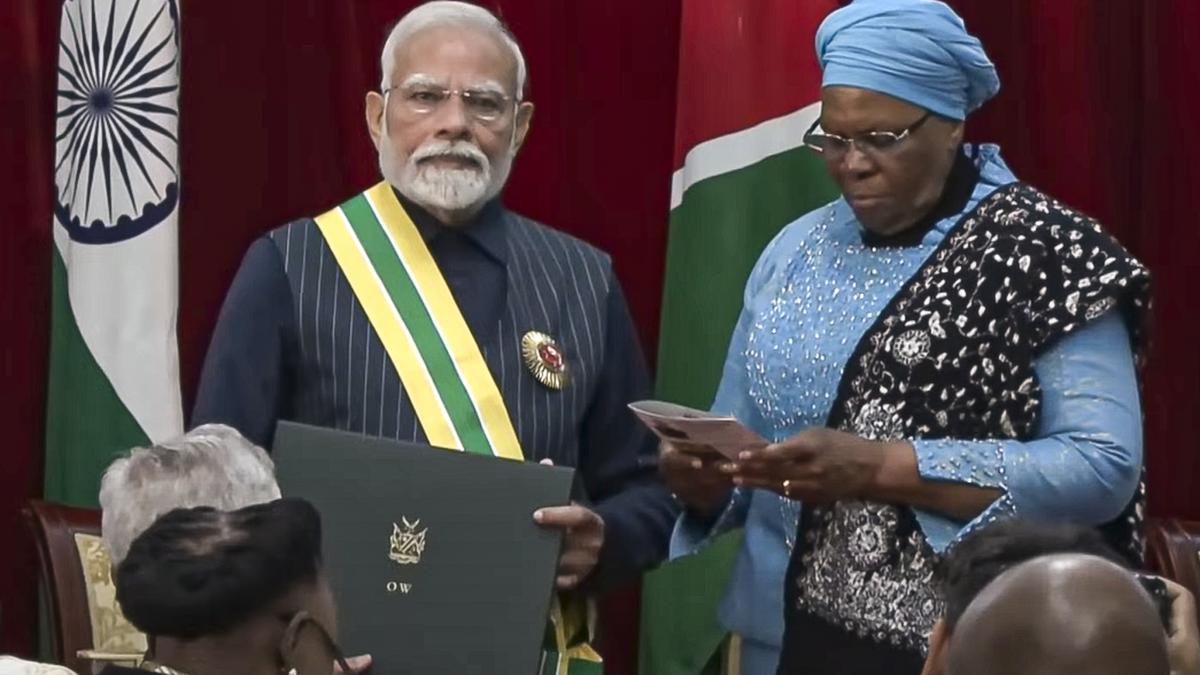
On July 9, 2025, Prime Minister Narendra Modi was conferred with Namibia’s highest civilian award, the Order of the Most Ancient Welwitschia Mirabilis. This marks Modi’s first-ever visit to Namibia and the 27th international award he has received from foreign governments since assuming office in 2014.
The award was presented by Namibian President Netumbo Nandi-Ndaitwah during the final leg of Modi’s five-nation tour aimed at strengthening India’s ties with Africa and Latin America.
🔍 UPSC-Relevant Analysis:
🔸 GS Paper II: International Relations
Theme: India and its bilateral relations
Subtheme: India–Africa relations, diplomacy, strategic outreach
1. Why Namibia Matters for India
-
Strategic Minerals: Namibia is one of the top global uranium producers, critical for India’s civil nuclear program and energy security.
-
Oceanic Linkages: Namibia lies along the Atlantic Ocean, and deeper ties could strengthen India’s reach in Africa’s western seaboard.
-
Support in Global Forums: Namibia has consistently supported India’s candidature in multilateral bodies.
2. Highlights of Modi’s Visit
| Area | Details |
|---|---|
| Award Received | Order of the Most Ancient Welwitschia Mirabilis |
| Bilateral Agreements | Signed MoUs in healthcare, green energy, digital infrastructure |
| Diplomatic Symbolism | Third PM-level visit from India; shows deepening ties with Global South |
📚 Background: India–Africa Partnership
-
India has prioritized Africa in recent years:
-
3rd India–Africa Forum Summit (2015)
-
Pan Africa e-Network Project (telemedicine, education)
-
Project Cheetah (cheetah reintroduction from Namibia to India)
-
-
India's approach is rooted in South–South cooperation, mutual respect, and development-oriented diplomacy—distinct from exploitative models.
🎯 UPSC-Style Questions
📝 Previous Year Questions (PYQs)
GS II – Mains:
-
2014: How does India see its place in the economic space of rising natural-resource-rich Africa?
-
2015: Increasing interest of India in Africa has its pros and cons. Critically examine.
-
2019: The long-sustained image of India as a leader of the oppressed and marginalised nations has disappeared on account of its new-found role in the emerging global order. Elaborate.
🧠 Model Answer Strategy (For GS II or Essay)
Q: “Discuss how India’s diplomatic outreach to Africa, as reflected in the 2025 Namibia visit, strengthens its leadership role in the Global South.”
Introduction:
Begin by defining India’s foreign policy focus on Africa and the Global South. Mention PM Modi’s 2025 visit to Namibia and the conferment of the country’s highest civilian honour.
Body:
A. Strategic Importance of Namibia
-
Uranium resources
-
Maritime connectivity
-
Stable democratic partner
B. Diplomatic and Developmental Outcomes
-
Four major MoUs: energy, health, digital
-
Health diplomacy (telemedicine, pharma exports)
-
Cultural and historic ties (support during Namibia’s independence struggle)
C. Soft Power & Global South Image
-
Recognition via awards strengthens India’s moral leadership
-
India as a development partner, not a donor
-
Aligns with India’s stance in G20, BRICS, and UN forums
Conclusion:
India’s deepening partnership with African nations, especially through high-level diplomatic engagement like the Namibia visit, reinforces its evolving role as a responsible, consultative, and development-oriented power in the Global South.
🧭 Takeaways for UPSC Aspirants
| Topic | Key Learning |
|---|---|
| International Awards | Use Modi’s awards as examples of soft power diplomacy |
| India–Africa Relations | Quote recent bilateral visits and MoUs |
| South–South Cooperation | Connect with UNCTAD, NAM, and India’s G20 presidency |
| Essay/GS II Themes | Soft power, regional cooperation, foreign policy evolution |
-
“India’s diplomacy is shifting from reactive to proactive.”
-
“Soft power and strategic interests are now complementary in India’s foreign policy.”
📌 Final Note
The 2025 visit to Namibia goes beyond symbolism. It reflects India’s calculated and strategic diplomatic outreach, especially in regions of geopolitical vacuum where India can emerge as a trusted partner.
For UPSC aspirants, this visit is a case study in diplomacy, strategic resource access, and the art of combining soft power with developmental partnership.
No comments:
Post a Comment